Bracing and Orthotics
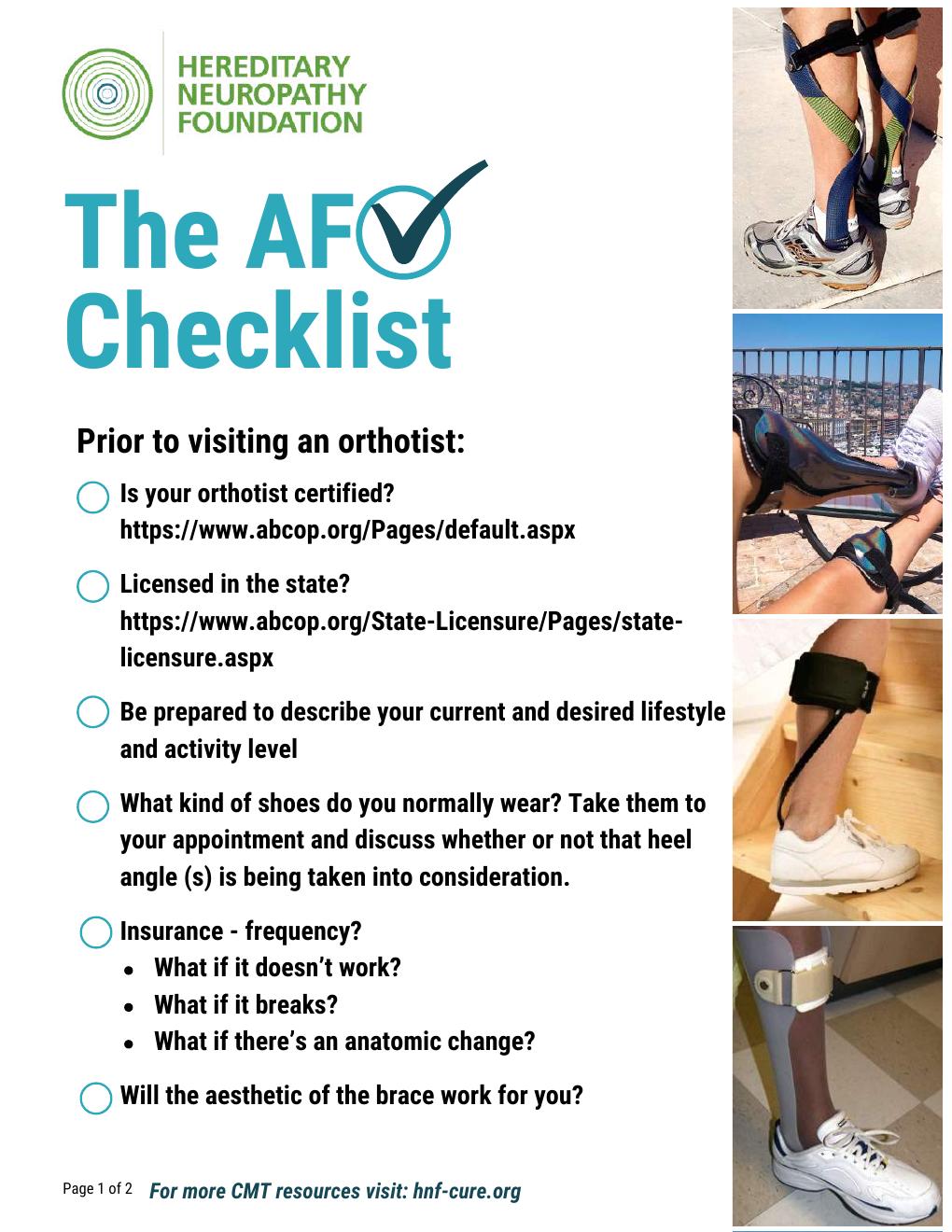
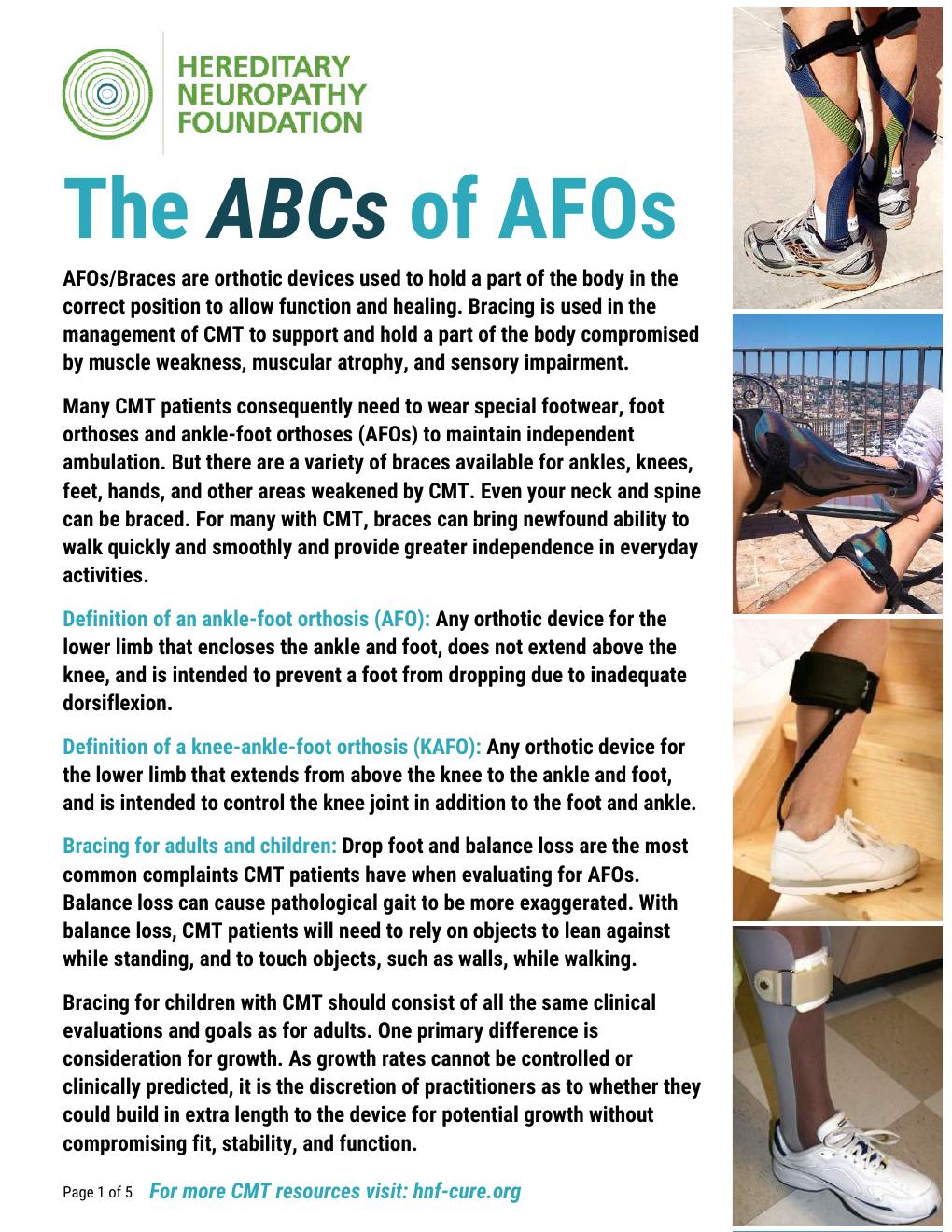
Bracing helps support parts of your body weakened by CMT, so you can move more safely and stay independent. For most people the first brace is an ankle-foot orthosis, usually shortened to AFO, which holds the foot at the right angle so your toes do not catch as you walk. That single change stops the trips and stumbles that come with foot drop, and many describe it as the biggest improvement they have made. A brace is not a last resort or a sign that things have gotten worse. It is a tool that lets you walk further, stand longer, and spend less of your attention on the ground in front of you. Whether it works comes down to fit. A brace that corrects the foot properly in all three directions of movement feels steady and comfortable, while one that only lifts the toe often does very little for balance. The difference is the clinician who makes it, which is why seeing a certified orthotist matters. This page explains the common types, how each one helps, what good fit looks like, and what to ask for when you are being fitted.

At a glance
- AFOs are the most common brace for CMT and keep your foot from dropping as you walk.
- A good brace corrects the foot and ankle in all three planes of movement, not just one.
- Custom braces are molded to your leg; off-the-shelf braces are usually not recommended for moderate or severe deformity or swelling.
- Balance starts from a stable, corrected footplate. If the foot is not aligned in the brace, balance stays poor.
- Energy-storing and floor reaction designs can reduce fatigue and improve balance.
- Children need adult-level evaluation plus attention to growth and over-correction.
- See a certified orthotist if you have foot or leg pain, balance loss, or an uneven gait.
Why bracing helps with CMT
CMT can bring muscle weakness, muscle loss, and changes in the way you feel touch and position. Bracing gives support to the parts of your body that these changes affect most, so you can keep doing more on your own.
Many people with CMT benefit from special footwear and orthotic devices, including ankle-foot orthoses (AFOs), to keep walking on their own. Braces exist for the ankle, knee, foot, hand, neck, and spine.
When a brace fits well and does its job, you may notice you walk a little faster, move more smoothly, and manage daily tasks with more confidence.
The words you will hear
An ankle-foot orthosis (AFO) is a brace for the lower leg that wraps the ankle and foot. It stops below the knee, and its main job is to keep your foot from dropping as you step.
A knee-ankle-foot orthosis (KAFO) reaches from above the knee down to the ankle and foot. It supports the knee joint along with the foot and ankle, which helps when weakness reaches higher up the leg.
Common CMT problems a brace can address
Foot drop and loss of balance are the issues people mention most. Other common ones include a high-arched foot (pes cavus), the foot rolling inward (varus) or outward (valgus), muscle loss, and unsteadiness.
The right brace aims to correct several of these at once: foot drop, poor balance, weakness in the calf muscle, deformity in the foot and ankle, and a slow walking speed.
What CMT does to your walking
When the muscle that lifts the front of your foot (the tibialis anterior) is weak, your body finds workarounds. You may lift your hip higher to clear your toes (a steppage gait), lean your trunk to the side, or swing your leg out in a half-circle so your toes do not catch the ground.
This also changes how your foot meets the floor. Instead of a normal heel strike, you may land flat, land toe-first, or make a low, uneven contact.
Left uncorrected, foot drop and poor balance make you work harder. They use more oxygen, overtax the muscles you still have, tire you out sooner, and raise your risk of tripping and falling. Over time, uncorrected foot position can shorten the achilles tendon (a contracture) or overstretch ligaments, leaving the joint loose and unstable.
How a good brace is designed and fitted
A well-made brace does more than hold your foot up. It aims to realign the foot and ankle as much as possible in all three planes of movement, at the ankle joint, the subtalar joint, and the midtarsal joint. Correcting only one direction is not enough.
For a custom brace, the process usually includes a corrective mold, adjustments in the lab, test braces to check the design, fabrication of the final brace, and a fitting session to adjust it to you.
Braces come in many forms: posterior leaf spring AFOs, solid ankle AFOs, floor reaction AFOs, jointed AFOs, adjustable range-of-motion jointed AFOs, energy-storing carbon fiber AFOs, KAFOs, and energy-storing KAFOs. They are made from materials such as thermoplastics, metal, leather, and carbon fiber.
Custom versus off-the-shelf
A custom AFO is built from a mold of your own leg. It is shaped to your structure and can address deformities that a generic brace cannot.
An off-the-shelf brace is pre-made and fitted by size, such as small, medium, or large, and by left or right. These can work for milder needs, but they are generally not recommended if you have moderate to severe deformity or swelling (edema).
Two ideas guide a good fit. First, if you cannot stand with balance, you cannot walk with balance, and balance needs a stable foundation. If the foot and ankle are not corrected in the brace's footplate, your balance can stay poor. Second, floor reaction designs help with balance and energy-storing designs cut down on fatigue. Pairing your brace with physical therapy helps restore balance further.
A note for children
Children with CMT should get the same careful clinical evaluation that adults do. On top of that, their braces need to account for how fast they are growing, and for the risk of over-correcting as the body changes.
The strength of specific muscles guides what brace is chosen, including the tibialis anterior, the calf (gastrocnemius), and the quadriceps, along with age, overall strength, hand involvement, and how much the muscles, tendons, ligaments, bones, and joints are affected.
When to see an orthotist
If you have balance loss, pain in your foot or leg, or an uneven gait, it is worth getting evaluated by a certified orthotist.
Waiting can let problems build. Uncorrected issues can lead to worsening joint deformity, more muscle weakness, more fatigue, a higher chance of falls, and a real hit to your quality of life. Getting fitted early keeps you moving and protects the strength you have.
Guides
Frequently asked questions
What is an AFO and how does it help with CMT?
An ankle-foot orthosis (AFO) is a brace for the lower leg that wraps the ankle and foot and stops just below the knee. It is the most common brace for CMT, and its main job is to keep your foot from dropping as you step. A well-fitted AFO can help you walk faster, move more smoothly, and manage daily tasks with more confidence.
Should I get a custom brace or an off-the-shelf one?
A custom AFO is built from a mold of your own leg, so it is shaped to your structure and can address deformities a generic brace cannot. Off-the-shelf braces are pre-made and fitted by size, and they can work for milder needs. They are generally not recommended if you have moderate to severe deformity or swelling (edema).
Why does a good foot brace need to correct in all three planes of movement?
A well-made brace does more than hold your foot up. It aims to realign the foot and ankle as much as possible in all three planes, at the ankle joint, the subtalar joint, and the midtarsal joint, because correcting only one direction is not enough. Balance also starts from a stable, corrected footplate, so if the foot is not aligned in the brace, your balance can stay poor. Pairing your brace with physical therapy helps restore balance further.
When should I see an orthotist about bracing?
If you have balance loss, pain in your foot or leg, or an uneven gait, it is worth getting evaluated by a certified orthotist. Waiting can let problems build, including worsening joint deformity, more weakness and fatigue, and a higher chance of falls. Getting fitted early keeps you moving and protects the strength you have.
Can bracing help children with CMT?
Yes. Children with CMT should get the same careful clinical evaluation that adults do, plus extra attention to how fast they are growing and the risk of over-correcting as the body changes. The strength of specific muscles, such as the tibialis anterior, the calf, and the quadriceps, along with age and overall involvement, guides which brace is chosen.
Start with your subtype
The most useful first step in living well with CMT is confirming your subtype. From there, the right care and research opportunities fall into place.