The TRIAD Model
TRIAD, Therapeutic Research In Accelerated Discovery, is the model HNF uses to turn promising science into clinical trials for Charcot-Marie-Tooth disease. It aligns three forces, academia, government, and industry, around a single principle: the patient voice comes first. By building that voice in from the beginning, HNF's research programs have the greatest potential for success.
The three sides of TRIAD
No single sector can move a CMT therapy from idea to approval on its own. TRIAD exists to connect them, so the work compounds instead of fragmenting. Partnerships vary with each program's research goals, preclinical and clinical milestones, and strategic agreements.
Why the patient voice comes first
HNF has conducted patient-focused research since 2007, when it funded its first study, "What It's Like To Live with Charcot-Marie-Tooth: Those Who Know It Best." That study became the pillar of the TRIAD program, and the conviction behind it has never changed: patients are the key stakeholders in every part of therapy development.
By understanding patients' experiences, preferences, and outcomes, HNF can better prioritize its projects and support its industry partners. The same principle drives HNF's patient-focused CMT Summits, where patients, caregivers, clinicians, and other stakeholders shape the agenda together, from topic selection to the conversations between sessions.
That is what sets TRIAD apart from research that happens to patients rather than with them. The people living with CMT are not an audience for the science, they are part of how it gets designed, prioritized, and judged. Keeping that voice at the center, from the earliest preclinical questions through trial design, is how the model turns lived experience into evidence that moves therapies forward.
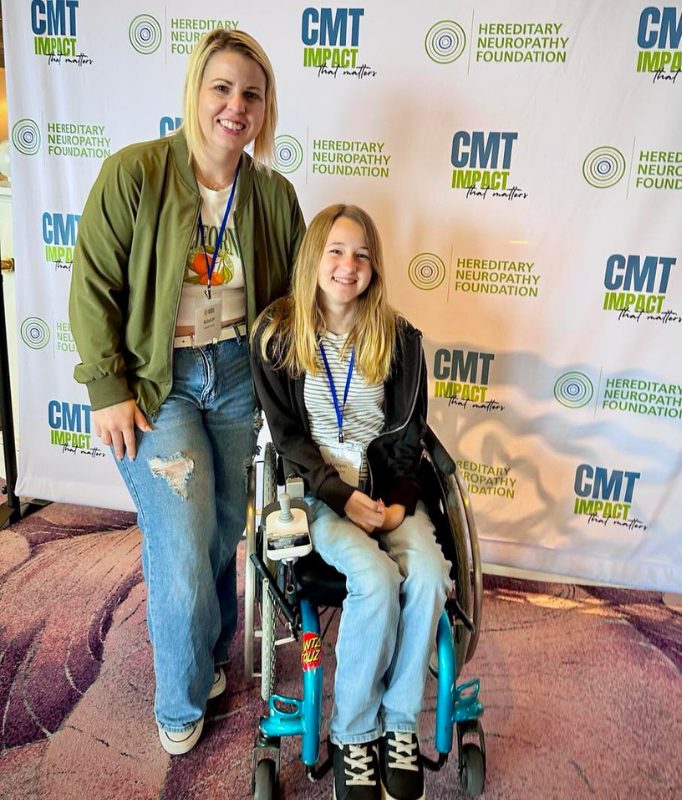
The patient voice is at the forefront of all we do. By incorporating it from the beginning, our research programs have the greatest potential for success.
The four-step road to a CMT clinical trial
Every medical treatment follows the same path to human trials. HNF's core initiatives, TRIAD, GRIN, CMT Genie, and the CMT Biobank, are each designed around one of its four steps, so the pieces a therapy needs are already in place and already connected.
- 1 Drug and gene therapy development HNF and its TRIAD partners contribute funding, expertise, and validated CMT models to de-risk the most promising scientific approaches, from repurposed and novel drugs to gene therapies targeting specific CMT subtypes. Powered by TRIAD partners
- 2 Natural history studies For a rare disease like CMT, you cannot design a credible trial without one. GRIN characterizes how each subtype presents and progresses over time, giving sponsors the data to define endpoints and recruit the right patients. Powered by GRIN
- 3 Testing in models HNF supplies the patient-derived biospecimens that TRIAD partners use to develop CMT cell models and test efficacy, toxicology, and dosing before a candidate reaches patients. The same specimens advance biomarker research across CMT subtypes. Powered by the CMT Biobank
- 4 FDA and regulatory HNF engages early in the regulatory process, working alongside sponsors to bring validated outcome measures, real-world evidence, and the patient voice to FDA so that when a CMT therapy is ready, the path to approval is clear. Powered by PFDD evidence
HNF’s programs at work
HNF’s own programs span four core pillars of research. Subtype-specific gene therapy, with a GDAP1 (CMT4A) roadmap furthest along. Assay and model development, advancing proof-of-concept studies across multiple CMT subtypes, with the CMT2A roadmap furthest along. Biomarkers for CMT1A, spanning surrogate blood biomarkers, physiological measures, and in-clinic functional outcomes targeting foot drop, one of CMT’s most disabling symptoms. And Real World Data, using continuous at-home monitoring to capture quality of life as it is actually lived.
Underneath all four sits the research toolkit: the rat and cell models, assays and endpoints that every one of these programs draws on rather than rebuilding.
Every one of these programs serves the same purpose: to support the clinical and regulatory path to a cure for as many CMT subtypes as possible, advancing four or five at a time, with the ultimate goal of testing multiple CMT types within a single basket trial.
Three subtype roadmaps are in progress: GDAP1, started in 2020, MFN2, started in 2012, and PMP22, started in 2019.
Frequently asked questions
What does TRIAD stand for?
TRIAD stands for Therapeutic Research In Accelerated Discovery. It is the model HNF uses to turn promising science into clinical trials for Charcot-Marie-Tooth disease.
What are the three sides of TRIAD?
Academia, government, and industry. TRIAD aligns top-tier university researchers, regulators and agencies such as the FDA, and biotech and pharmaceutical companies around one goal: advancing CMT research to clinical trials.
Why is the patient voice central to TRIAD?
HNF has conducted patient-focused research since 2007. Building the patient voice in from the start helps HNF prioritize the right projects, design better studies, and bring real-world evidence into regulatory review, which is what gives a program the greatest potential for success.
How does TRIAD connect to HNF’s other programs?
TRIAD coordinates the four steps a therapy must clear on the way to a trial. GRIN supplies natural history data, the CMT Biobank supplies biospecimens for testing in models, and HNF’s patient-focused drug development work brings the patient voice into FDA engagement.
Explore TRIAD further
TRIAD is a model, a research engine, and a group of people. Learn who guides it, or find out how your organization can join it.
The patient voice that powers TRIAD starts with you. Join GRIN → and add your story to the research.