Physical Therapy and Exercise
Staying active is one of the best things you can do for your body and your mind when you live with Charcot-Marie-Tooth. Physical therapy and regular movement help you keep your strength, balance, and independence for as long as possible. The goal is not to rebuild muscle that CMT has already affected, because that is not how the condition works. It is to protect what you still have, keep your joints moving freely, and train your body to compensate for the signals your nerves no longer send reliably. Done well, that means fewer falls, less overuse pain, and more energy at the end of the day. Pushed too hard, it can leave you more fatigued and sore than when you started, which is why a therapist who understands neuromuscular conditions matters. This page covers what physical therapy can realistically do for CMT, how to find the right therapist, and how to exercise safely at home.
At a glance
- Regular movement helps protect your strength, balance, and independence, though it will not cure CMT.
- Choose a physical therapist with the right credentials: PCS for children, OCS or NCS for adults with CMT experience.
- Daily range-of-motion work helps prevent contractures in your hands and feet.
- Aim for roughly 30 minutes of activity a day as an adult, or 60 minutes for children, at a pace your therapist approves.
- Braces, AFOs, and other assistive devices are tools for doing more, not signs of giving up.
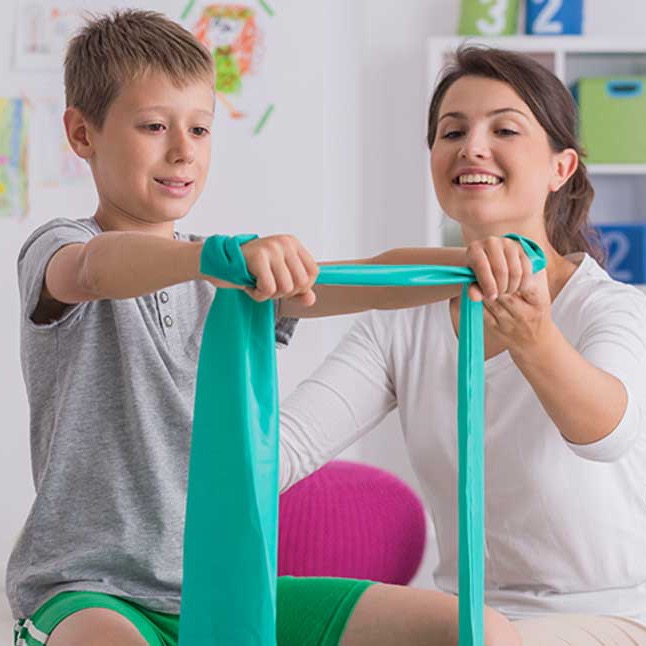
- Resistance bands make it easy to start strengthening at home.
Why movement matters with CMT
Physical therapy and physical activity play an essential role in your physical and mental well-being, and that is especially true when you live with a progressive condition like CMT.
Movement will not cure CMT, but it can help you minimize pain, build and protect strength, sharpen your balance, and hold onto your mobility. The goal is to keep you doing the things you love, safely, for as long as you can.
Our Movement Is Medicine program supports the safe adoption of a more active lifestyle through exercise and nutrition designed for people with disabilities. It offers CMT-friendly virtual exercise classes each month, in both live and recorded formats, so you can join in a way that works for you.
Finding the right physical therapist
Physical therapists specialize in helping people move well and stay healthy. A therapist who understands CMT can tailor a program to your specific needs.
For children, look for a physical therapist with pediatric clinical specialist (PCS) credentials. For adults, an orthopedic clinical specialist (OCS) or a neurologic clinical specialist (NCS) is a good fit, depending on their experience with CMT.
It is worth asking a therapist directly whether they have worked with CMT or other neuromuscular conditions before you begin.
Five areas physical therapy can help
Contracture management. Daily range-of-motion exercises and good positioning help prevent joint deformities in your hands and feet. Physical therapists, occupational therapists, orthotists, and surgeons often work together to address progressive loss of motion.
Proprioception. CMT can change the way your body senses its own position, which makes balance and walking harder. A therapist can train you to compensate visually and build an individualized program that lowers your risk of falls.
Endurance. Public health guidance suggests about 30 minutes of activity a day for adults and 60 minutes for children. A physical therapist can teach you how to take part safely in the activities you enjoy and can coordinate with fitness instructors on how to use equipment.
Assistive devices. Braces, crutches, canes, wheelchairs, and scooters can improve your balance, reduce fatigue, and lower your fall risk when muscles are weak. The right device is about doing more, not doing less.
Bracing and AFOs. Ankle-foot orthoses (AFOs), foot orthoses, and other braces can help you walk independently. There are options for the ankles, knees, feet, hands, neck, and spine, and many people find a well-fitted brace gives them a newfound ability to walk quickly and smoothly.
Resistance bands and exercising at home
You do not need a gym to get started. Simple resistance band exercises can be done at home and are a gentle way to build strength.
As Arthur Ashe put it, start where you are, use what you have, and do what you can. That mindset fits CMT well. Progress comes from consistency, not intensity.
Band Together for CMT
HNF sends out a resistance band and exercise book so you can start the routine above at home. Make a gift through the form below and Courtney ships your set out to you.
Managing pain without medication
Pain with CMT often comes from overuse or from the altered movement patterns that weakness and contractures create.
Physical therapy offers non-medication techniques to ease that kind of pain. If you are hurting, tell your therapist. They can adjust your program and show you strategies to move more comfortably.
Frequently asked questions
Is it safe to exercise with CMT?
Yes, staying active is one of the best things you can do for your body and mind with CMT, as long as you move at a pace your therapist approves. Movement will not cure CMT, but it can help you minimize pain, build and protect strength, sharpen your balance, and hold onto your mobility. The goal is to keep you doing the things you love, safely, for as long as you can.
What kind of physical therapist should I look for?
A therapist who understands CMT can tailor a program to your specific needs. For children, look for a physical therapist with pediatric clinical specialist (PCS) credentials, and for adults, an orthopedic clinical specialist (OCS) or a neurologic clinical specialist (NCS) is a good fit. It is worth asking a therapist directly whether they have worked with CMT or other neuromuscular conditions before you begin.
Can I do physical therapy exercises at home?
Yes, you do not need a gym to get started. Simple resistance band exercises can be done at home and are a gentle way to build strength, and daily range-of-motion work helps prevent contractures in your hands and feet. Progress comes from consistency, not intensity, so start where you are and do what you can.
How much exercise should I get with CMT?
Public health guidance suggests about 30 minutes of activity a day for adults and 60 minutes for children, done at a pace your therapist approves. A physical therapist can teach you how to take part safely in the activities you enjoy and can coordinate with fitness instructors on how to use equipment. Assistive tools like braces and AFOs are about doing more, not giving up.
Can physical therapy help with CMT pain?
Often yes. Pain with CMT frequently comes from overuse or from the altered movement patterns that weakness and contractures create, and physical therapy offers non-medication techniques to ease it. If you are hurting, tell your therapist so they can adjust your program and show you strategies to move more comfortably. You can also explore other approaches on the pain management page.
Start with your subtype
The most useful first step in living well with CMT is confirming your subtype. From there, the right care and research opportunities fall into place.