CMT Biobank access
The CMT Biobank is the first biorepository dedicated to Charcot-Marie-Tooth disease: a managed collection of patient biospecimens, linked to consented GRIN registry data, that researchers and industry can draw on to build disease models, identify biomarkers, and validate drug candidates across every CMT subtype.
Request biobank access
Tell us about your work and what you need. The CMT Biobank is open to qualified academic and industry researchers at minimal cost, and every request is reviewed by the GRIN Advisory Council to confirm it advances the science and respects donor consent.
What the biobank holds
Each donation is processed into research-ready material and paired with the donor’s consented, de-identified registry record, so a sample arrives with the genetic and clinical context that makes it useful.
The gap it closes
Translational CMT research has been held back by a basic shortage: there was no biorepository of CMT samples for researchers or industry to draw from. Targets and biomarkers cannot be validated without patient material, and disease models cannot be built without cells.
The CMT Biobank closes that gap. It supplies the cellular starting material to build models for each subtype and the linked clinical data to anchor biomarker discovery, the work that has to happen before a candidate therapy can move into a trial.
How it works
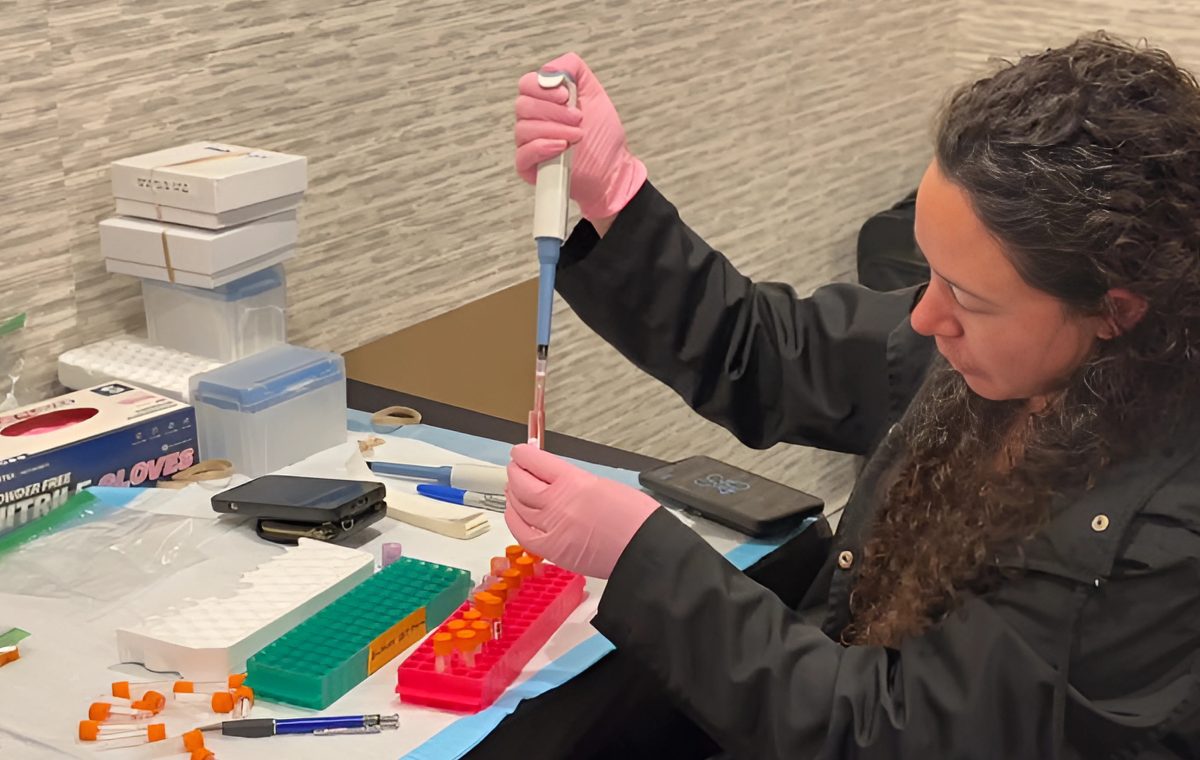
- 1 Donate Participants with a confirmed CMT diagnosis, plus unaffected sibling controls, give a small blood sample at collection events. Participation is free.
- 2 Bank Our partner COMBINEDBrain processes and stores each sample in a managed biorepository, linked to the donor’s de-identified GRIN registry data.
- 3 Request Academic and industry researchers apply for samples and data. Requests are reviewed by the GRIN Advisory Council.
- 4 Accelerate Approved teams build subtype cell models, run biomarker discovery, and validate drug candidates, moving therapies toward the clinic.
Built with COMBINEDBrain
HNF operates the CMT Biobank with COMBINEDBrain, a nonprofit biorepository consortium that supports more than 140 rare-disease communities. We selected COMBINEDBrain for its established biorepository infrastructure and its proven ability to stand up collection quickly, so samples reach researchers without delay.
Frequently asked questions
Who can request samples from the CMT Biobank?
The biobank is open to qualified academic and industry researchers. Sample and data requests are reviewed by the GRIN Advisory Council to confirm the work advances CMT science and respects donor consent. Access is provided at minimal cost.
What types of biospecimens are available?
The biobank holds whole blood, urine, cultured skin fibroblasts, induced pluripotent stem cells (iPSCs), and tissue. Each sample is linked to the donor’s de-identified GRIN registry data, so it arrives with genetic and clinical context.
Are samples linked to genetic and clinical data?
Yes. Every banked sample is paired with the donor’s consented, de-identified GRIN record, including genetic reports, patient-reported outcomes, and validated CMT clinical scales. That linkage is what makes the material useful for target validation and biomarker discovery.
Which CMT subtypes are represented?
The biobank is built to support the full range of CMT genetics, with material drawn from participants across more than 100 known CMT subtypes. The number of samples banked for any specific subtype grows as collection events continue.
How is donor consent and privacy protected?
Participants donate under informed consent through the GRIN registry. Samples and linked data are de-identified before they reach researchers, and requests are reviewed by the GRIN Advisory Council. The biobank operates with HNF’s partner COMBINEDBrain, an established rare-disease biorepository consortium.
Living with CMT and want to contribute? Your donation is what powers this work. Find a collection event near you →
Exploring a broader collaboration? Learn about the TRIAD partnership model →