Meet Jaxson
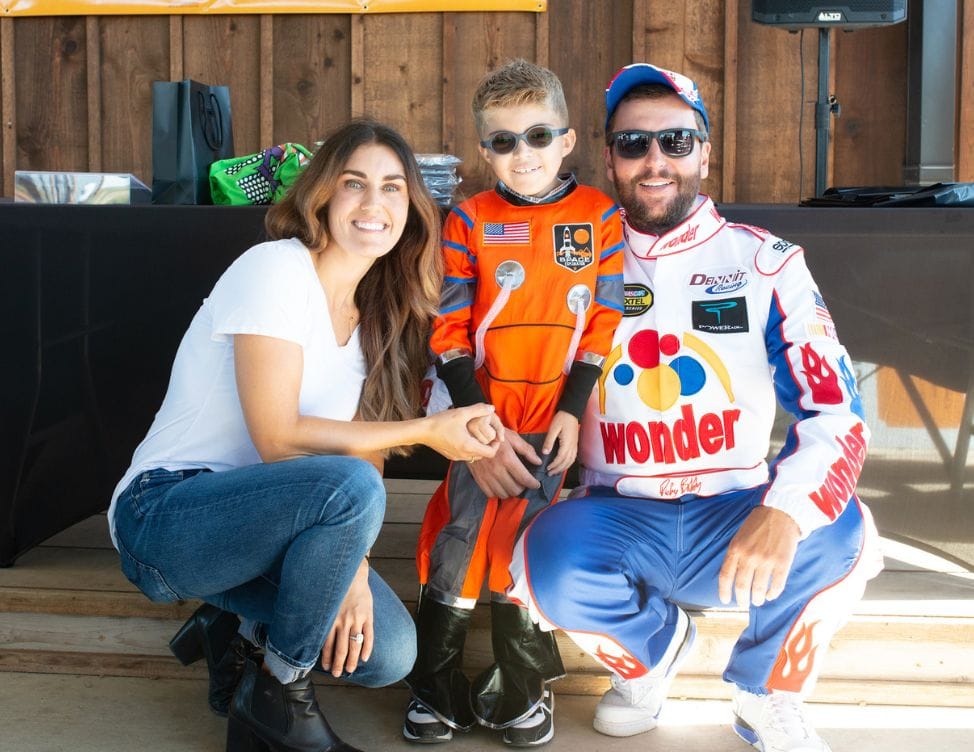
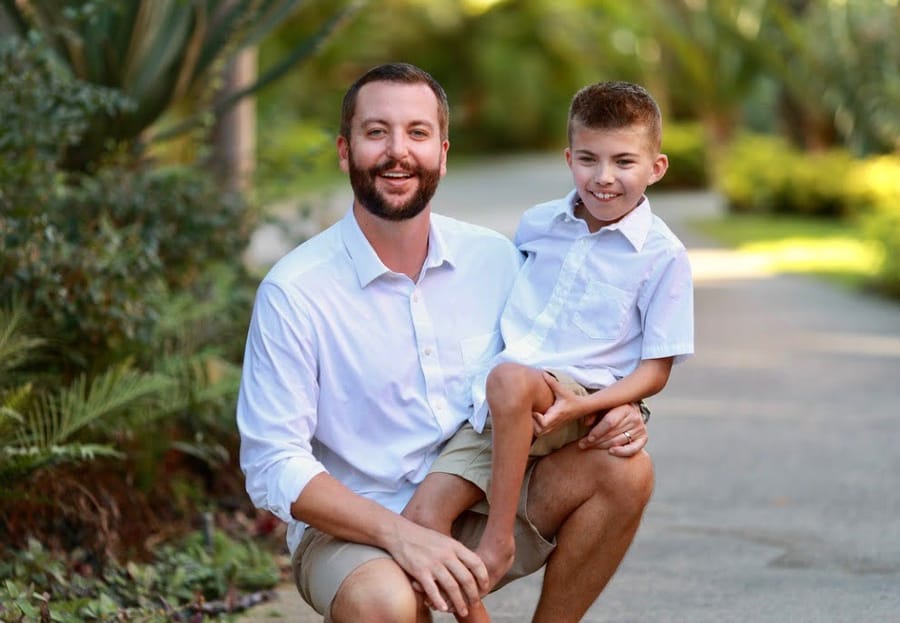
Jaxson Flynt was diagnosed with a single-gene defect in the MTRFR (C12orf65) gene, causing a rare mitochondrial disease, on October 30, 2014. Jaxson is a happy boy who loves to play basketball and spend time with his mom Lindsey, dad Garret, sister Madison, and two labradoodles.
He loves being outside. He loves the water, the boat, his dogs and his friends, and by his family's account he is something of a daredevil. What he wants is what every other kid his age wants, which is to do everything.
Batteries that run low
MTRFR, also called C12orf65, is the gene behind CMT6. It builds part of the machinery mitochondria use to make their own proteins, and when it does not work, energy production stalls in the cells that need it most.
Your mitochondria are the powerhouse of your cells, the batteries of your cells. Ours run on full and Jaxson's are always on low.
Jaxson's mother
The signs came early
From an early age the family noticed that Jaxson had what they called wiggly eyes, which has a clinical name: nystagmus. It was the first visible sign of what the mutation was doing to his optic nerve.
Living with a rare disease
He is nonverbal and has limited vision and fine motor skills, and he receives his nutrition through a g-button.
When he was diagnosed, his family were told he would not reach five years old.
Even so, Jaxson has met many milestones the doctors thought would be impossible.
The part his family is racing
Jaxson's mutation causes optic nerve atrophy, and once the optic nerve begins to die there is nothing anyone can do to bring it back. The end of that road is blindness, which is why sight is the piece the family is chasing hardest.
Imagine losing your vision. Imagine not being able to look into the face of your mom and dad, or see your best friend, or see colors, or a rainbow.
Jaxson's mother
Eighteen months in, a decision
Understanding the diagnosis took time. About a year and a half after it came, his mother reached a turning point that a lot of rare disease parents will recognize.
I've got to stop feeling sorry for myself. My son is still here. I have to do something. So what am I going to do?
Jaxson's mother
Working toward a cure
Our goal is to slow the progression of this disease while working toward a cure for Jaxson and future generations, and we are currently focused on restoring the vision affected by optic nerve atrophy. Gene therapy looks to be a promising treatment for Jaxson's single-gene defect, and we expect this research to move toward a clinical trial.
The approach is easier to picture than it sounds. A virus that normally infects people without causing disease is stripped out and used as a delivery van, carrying working genetic material into the cell to restore the function the mutation took away. Delivered into the eye, the hope is that it saves sight that would otherwise be lost.
Before any of that can be tested in a person, it has to be tested somewhere, and that means an animal model has to exist. There is no model for this mutation, so the team is building one. It is unglamorous, slow work, and nothing else can start without it.
Bigger than one boy
MTRFR sits inside a much larger family of mitochondrial disorders, and mitochondrial dysfunction turns up in far more common diseases too, from diabetes to Parkinson's. A therapy that works here may not stop here.
We want Jaxson's life and his legacy to be that future generations won't have to go through what we went through, because of Jaxson.
Jaxson's mother
His sister put the same thing more simply.
My parents are doing everything they can. I'm just going to enjoy every day.
Jaxson's sister