“The Next Family Deserves Better”: CureCMT (HNF) Brings the CMT-SORD Community’s Voice to the FDA
On August 4, CureCMT (HNF) led a Patient-Focused Listening Session with the FDA dedicated entirely to CMT-SORD. Six patients and family members told the agency what the disease costs them, and what a treatment would give back.
On August 4, CureCMT (HNF) led a Patient-Focused Listening Session with the U.S. Food and Drug Administration (FDA), dedicated entirely to CMT-SORD, a progressive, inherited form of Charcot-Marie-Tooth (CMT) disease.
Our goal was simple: make sure the people living with CMT-SORD, not just the data about it, could speak directly to the agency deciding whether new treatments reach them.
A room full of listeners
Fifty-two people joined the call. 43 of them were from the FDA and its partner, the Reagan-Udall Foundation, spanning five centers across the agency. That kind of cross-agency attention for a single rare disease is rare, and it didn’t happen by chance. It happened because our founder and CEO, Allison Moore, alongside genetic counselors, physician-scientists, and, most importantly, patients and family members, made the case that CMT-SORD could not wait.
Allison opened with real-world data from CureCMT’s Global Registry of Inherited Neuropathies. Dr. Stephan Zuchner (University of Miami) broke down the genetics behind a condition many labs still can’t properly test for. Dr. David Herrmann (University of Rochester) laid out the clinical picture.
Then the scientists stepped back, and the people who live those statistics every day stepped forward.
Stories that stayed with the room
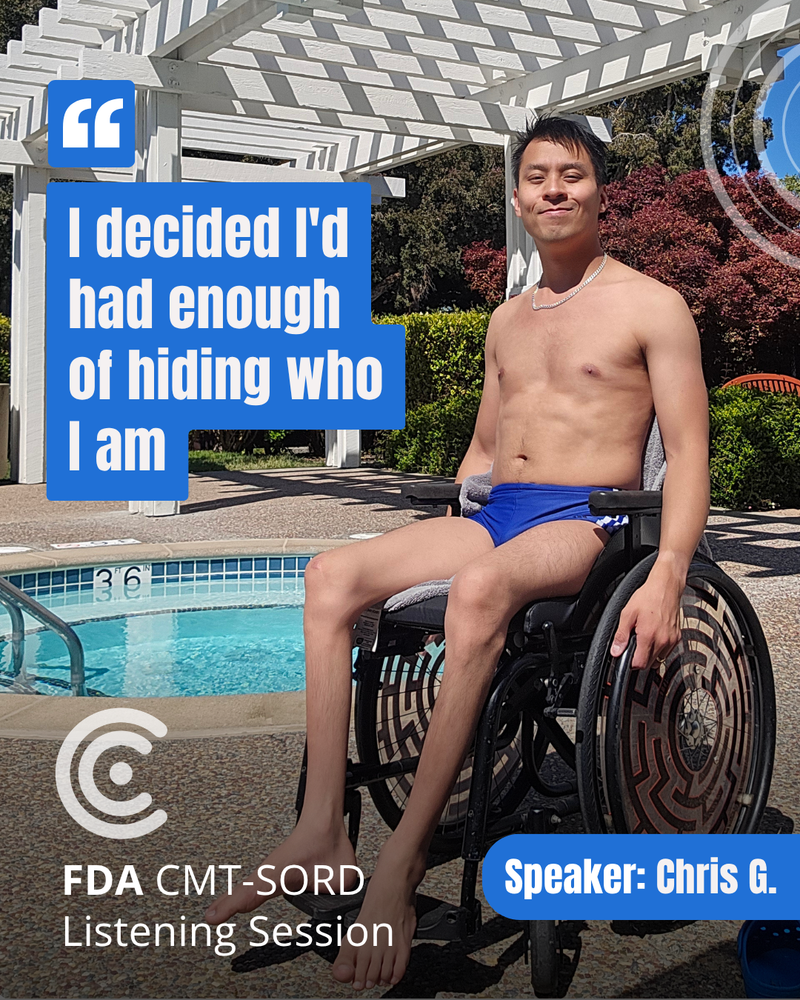
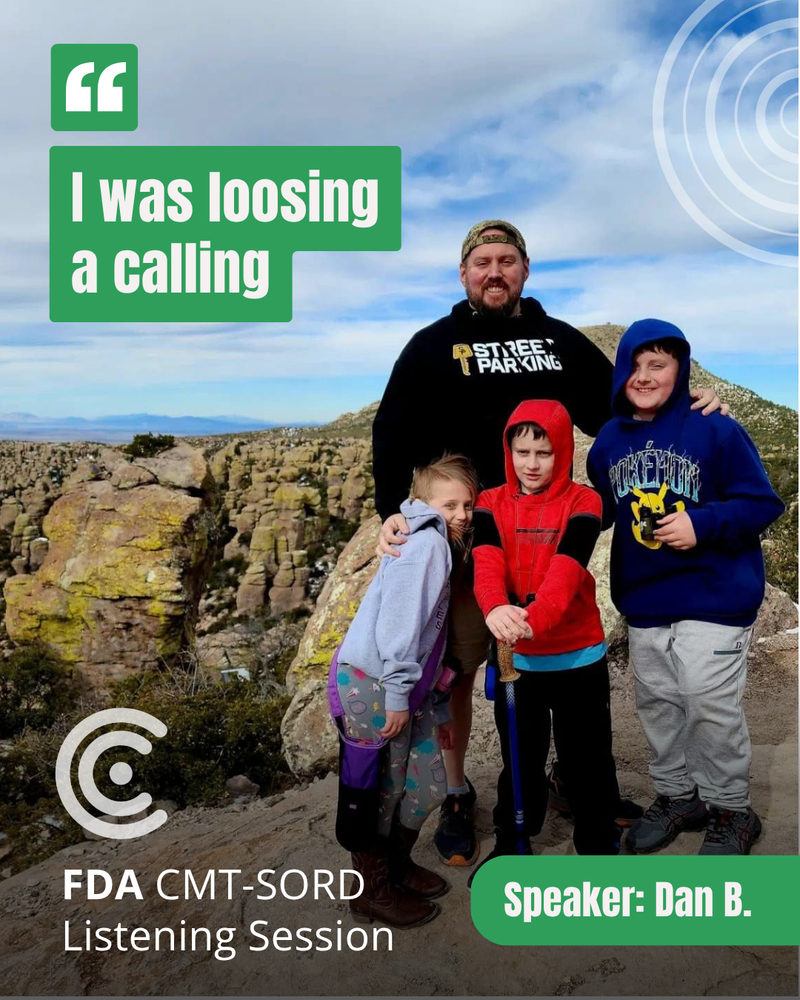
Chris spent a decade refusing to wear shorts in public, hiding the disease he didn’t yet have a name for, until his own wife, a physician, spotted the signs. He later flew back and forth 34 times for a clinical trial, in part for the son he’s raising now.
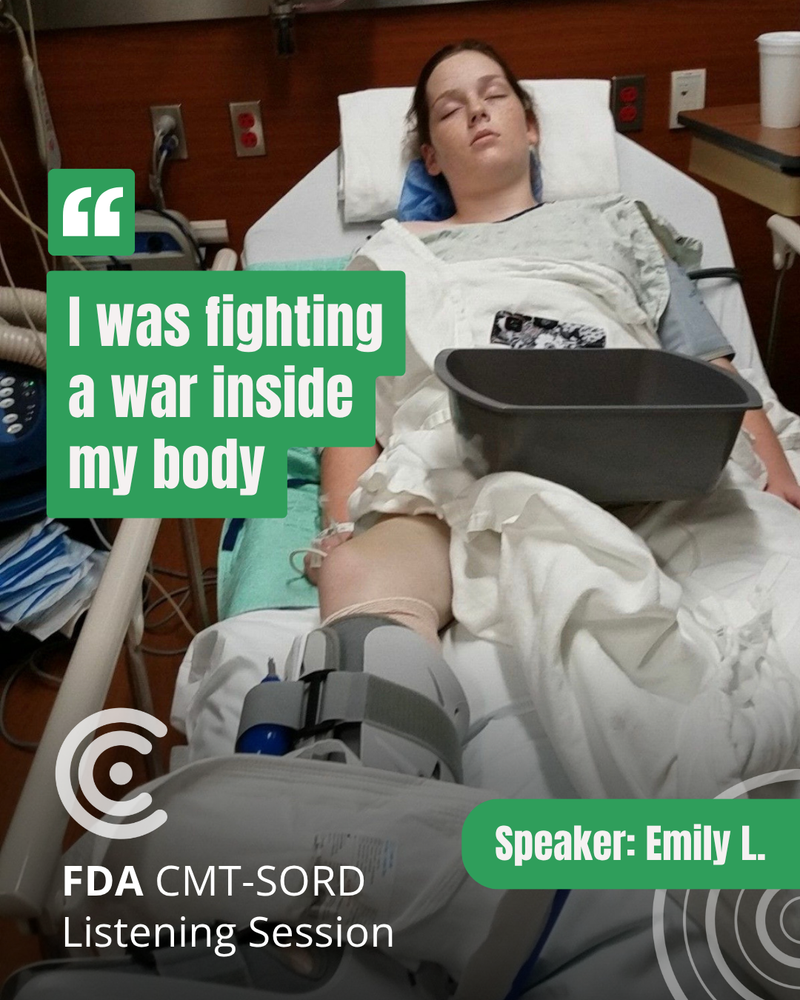
Emily went from the fastest runner on her basketball team to the slowest, in just two months. Diagnosed at 18, she now lives by one line: “Don’t count the days, make the days count.”
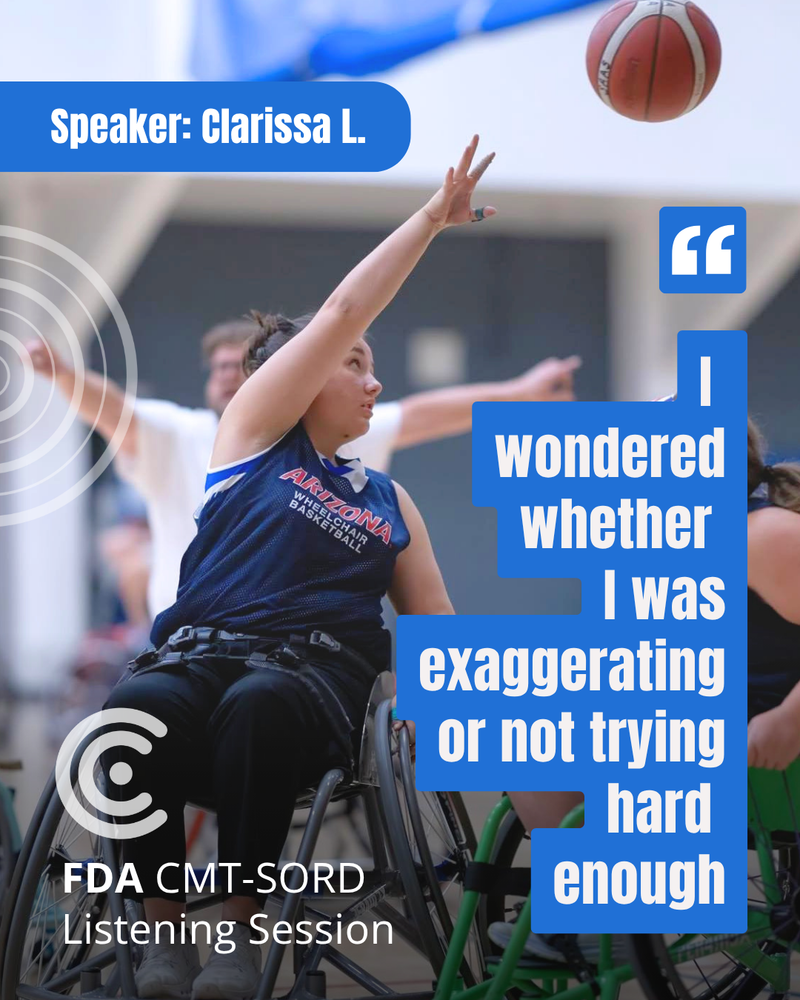
Clarissa spent five years being told her symptoms were all in her head. She’s now finishing a master’s degree in London while researching CMT-SORD herself. Her ask isn’t a cure. It’s “a fighting chance to remain academically engaged, socially connected, and independent.”
Daniel served nearly a decade as a U.S. Army Cavalry Scout with an undiagnosed neuromuscular disease, convinced he simply wasn’t trying hard enough. He wasn’t diagnosed until age 41. Today, he just wants to remain the husband and father he is, for as long as he can.
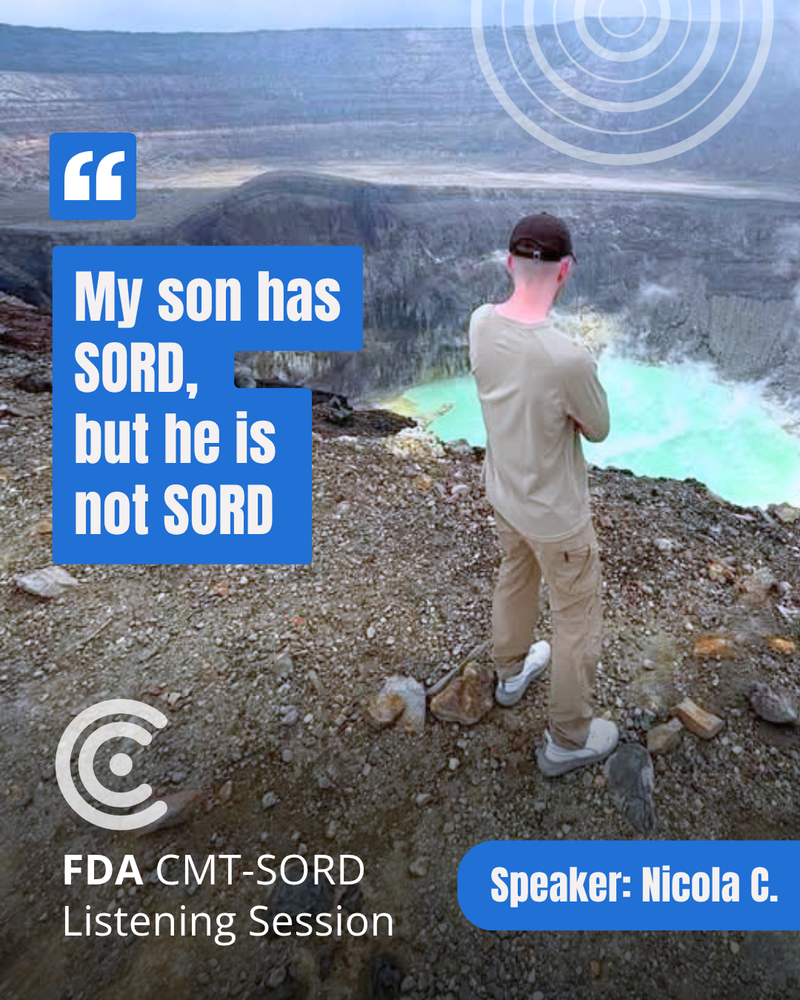
Nicola spoke for her son Matthew, who, since his diagnosis at 17, has traveled to 19 countries and climbed a volcano on braces, feet rubbed raw. Her words to the FDA: “He has SORD, but he is not SORD.”
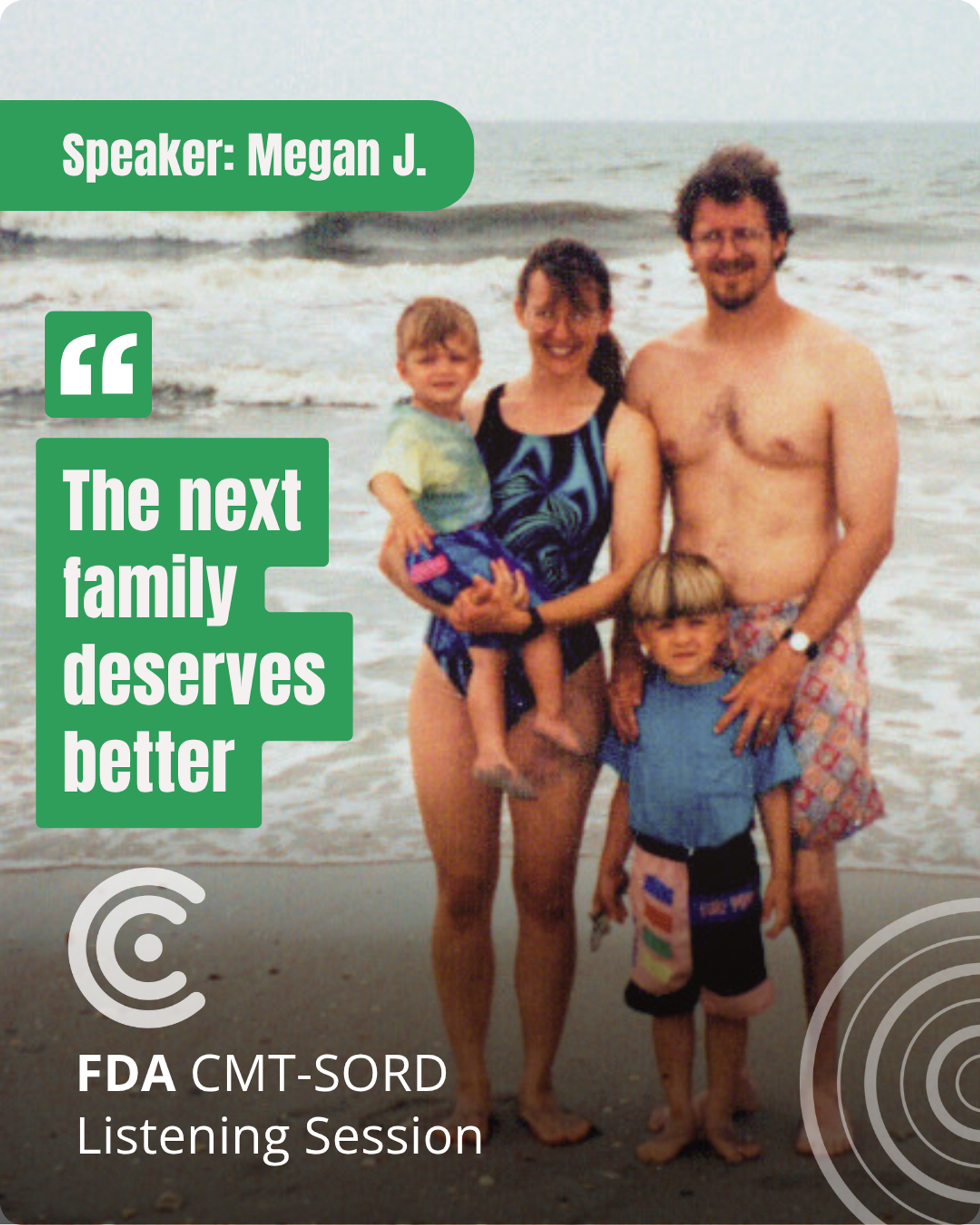
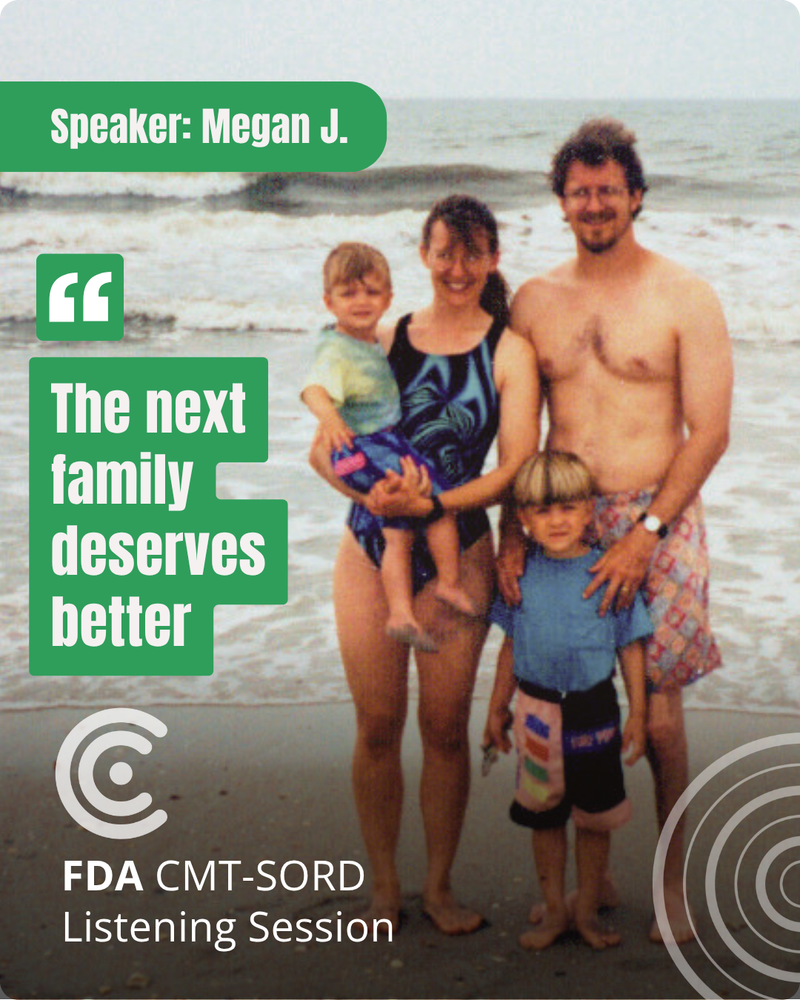
Megan spoke for her husband, Greg, undiagnosed for 46 years. During 18 months on expanded access treatment, she finally met the man underneath the disease. She closed the session with five words that said it all:
The next family deserves better.
I would do anything to get out of bed
Asked how much risk they’d accept for a chance at treatment, families didn’t hesitate. They described real gains from clinical trials, less tripping, more strength, more energy, that quietly disappeared once treatment ended.
What comes next
This session was one more step in a much longer fight: making sure the FDA hears CMT-SORD as the lived reality of people like Chris, Emily, Clarissa, Daniel, Matthew, and Greg, not a rare genetic footnote.
We’re grateful to every family who trusted us with their story, and to every agency partner who showed up to listen. The work continues.
Make your voice heard: join GRIN, and read the full report.