Neurotoxic Drug List
Some medications can damage nerves and may make CMT worse. This list groups drugs by how likely they are to cause a problem, so you and your doctor can weigh the risks together before you start something new.
At a glance
- Bring this list to your doctor before starting any new medication. It is for discussion, not medical advice, and is not a reason to stop a drug on your own.
- Vincristine is the one drug to avoid in all circumstances if you have or might have CMT. It carries an FDA black box warning and can cause severe injury after just one or two doses.
- For every other drug, the risk has to be weighed against the benefit of the treatment.
- If new numbness, weakness, or pain starts soon after a new medication, contact your doctor right away. Recovery after stopping can take weeks or months.
- Tell your health care team, especially your anesthesiologist, about any family history of CMT.
About this list
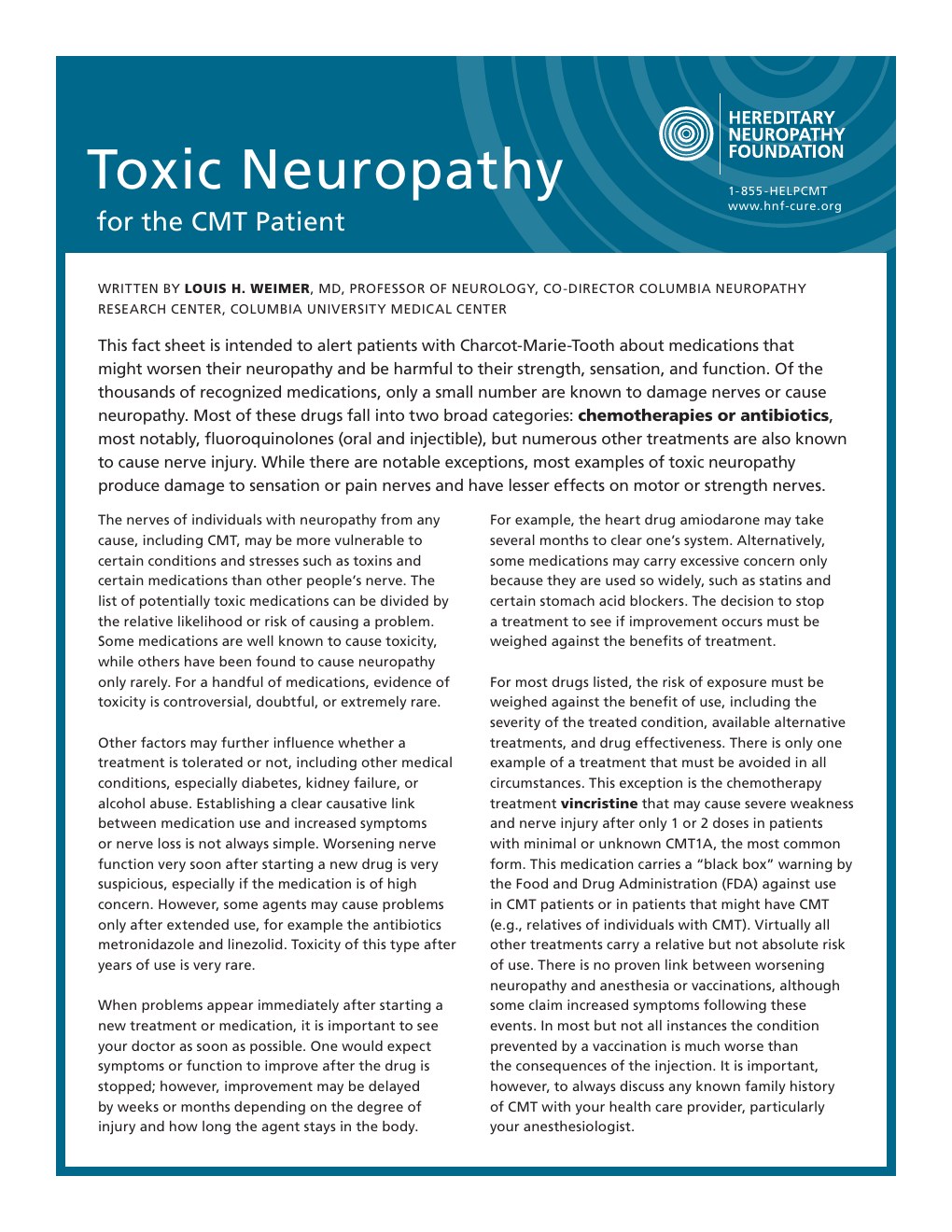
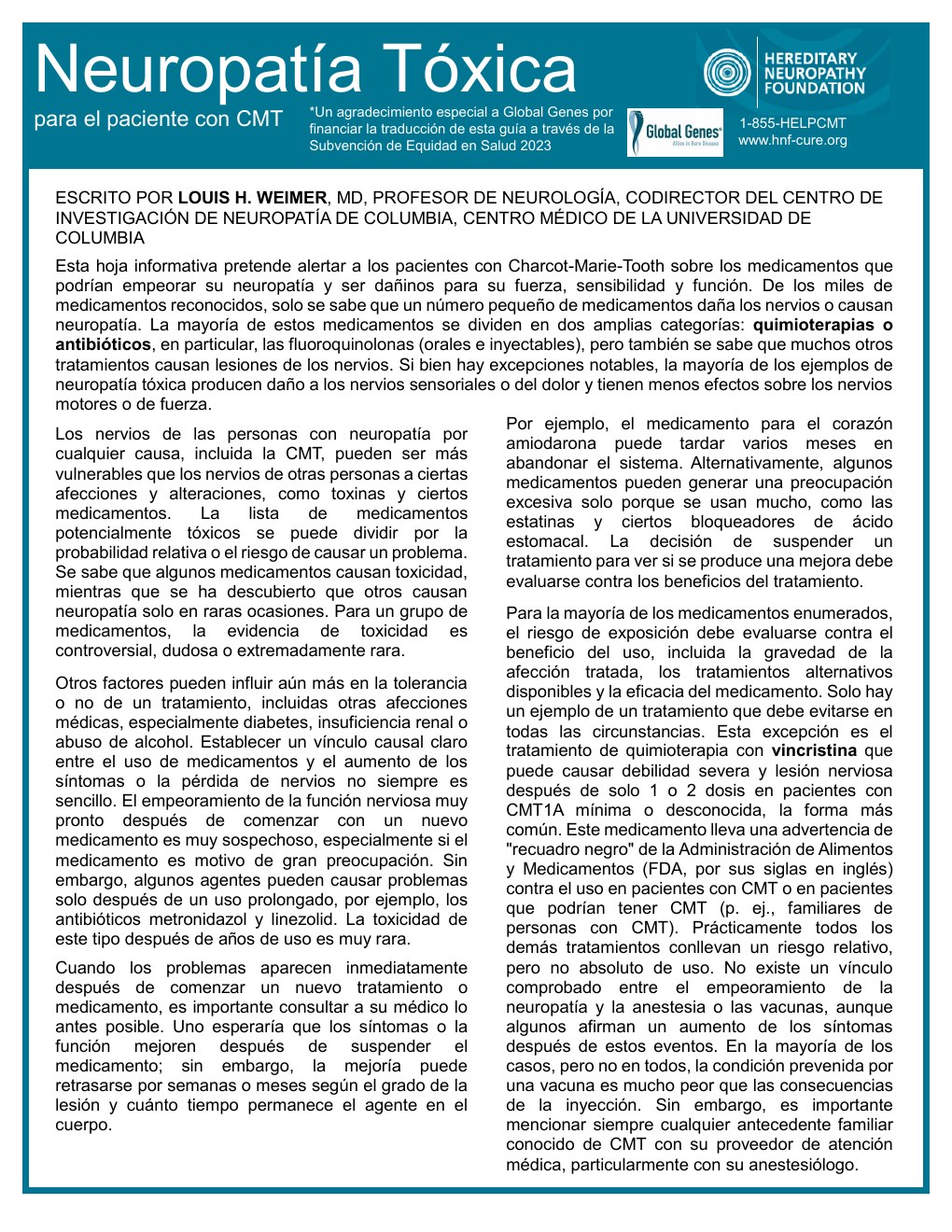
Of the thousands of medications in use, only a small number are known to damage nerves or cause neuropathy. Most of them fall into two groups: chemotherapies and antibiotics, especially fluoroquinolones (oral and injectable). Other treatments can injure nerves too.
If you already have neuropathy from any cause, including CMT, your nerves may be more vulnerable to certain medications than other people's. That is why this list sorts drugs by relative risk. Some are well known to cause harm. Others have caused neuropathy only rarely. For a few, the evidence is doubtful or extremely rare.
Other things can affect whether a drug is tolerated, including other health conditions, especially diabetes, kidney failure, or alcohol use. Some drugs cause trouble only after long use, such as the antibiotics metronidazole and linezolid, and even then it is very rare.
If symptoms appear soon after you start a new medication, see your doctor as soon as you can. Symptoms usually improve once the drug is stopped, but improvement can be delayed by weeks or months. Some drugs, like the heart medication amiodarone, take months to clear your system.
For almost every drug here, the risk has to be weighed against the benefit of the treatment, including how serious your condition is and what other options exist. There is one exception. The chemotherapy drug vincristine must be avoided in all circumstances. It can cause severe weakness and nerve injury after only one or two doses in people with minimal or unknown CMT1A, the most common form, and it carries an FDA black box warning against use in people who have CMT or who might have it (including relatives of people with CMT).
There is no proven link between worsening neuropathy and anesthesia or vaccinations, though some people report more symptoms after them. In most cases the illness a vaccine prevents is far worse than the shot. Always tell your health care providers about any family history of CMT, especially your anesthesiologist.
This is safety information to discuss with your doctor. It is not medical advice, and no drug should be started or stopped based on this page alone.
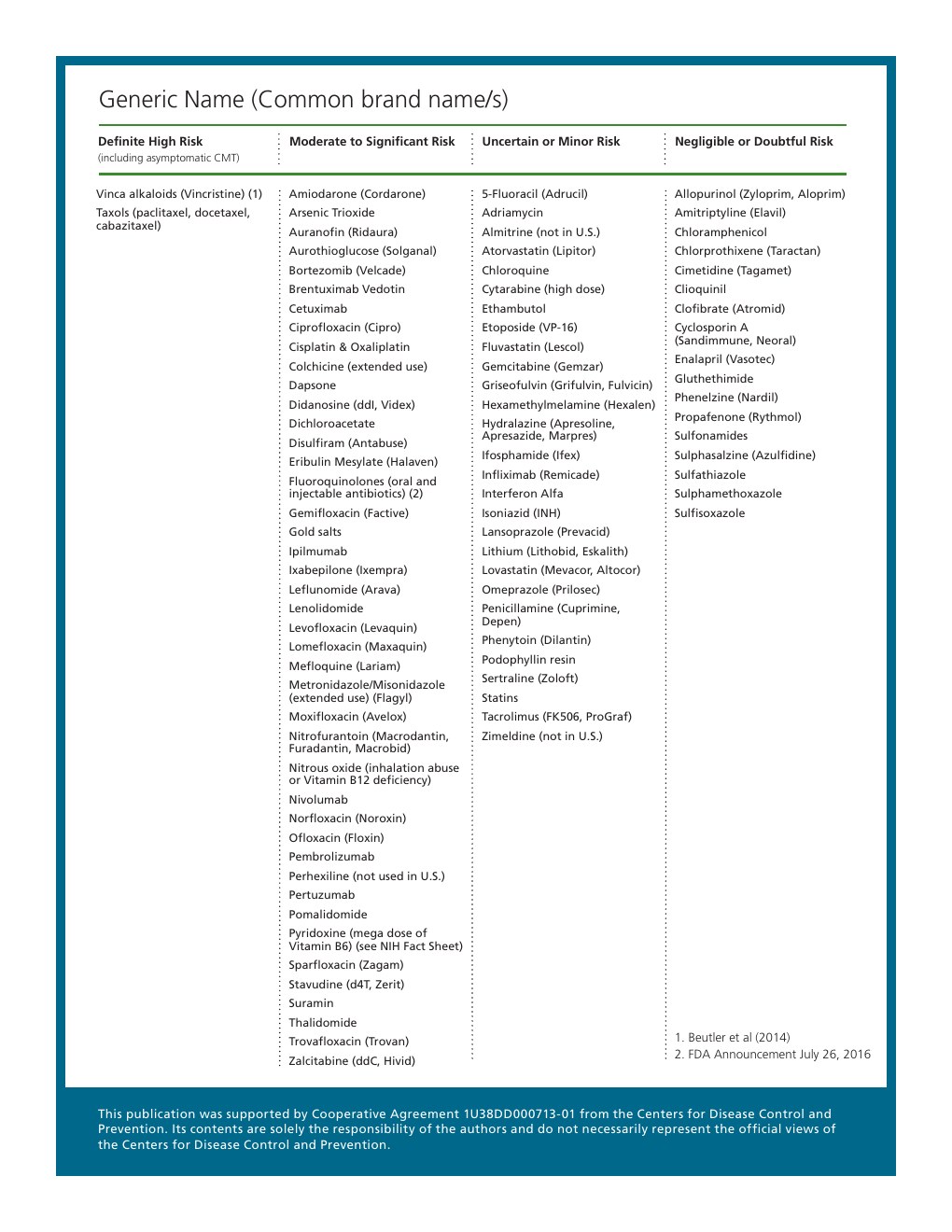
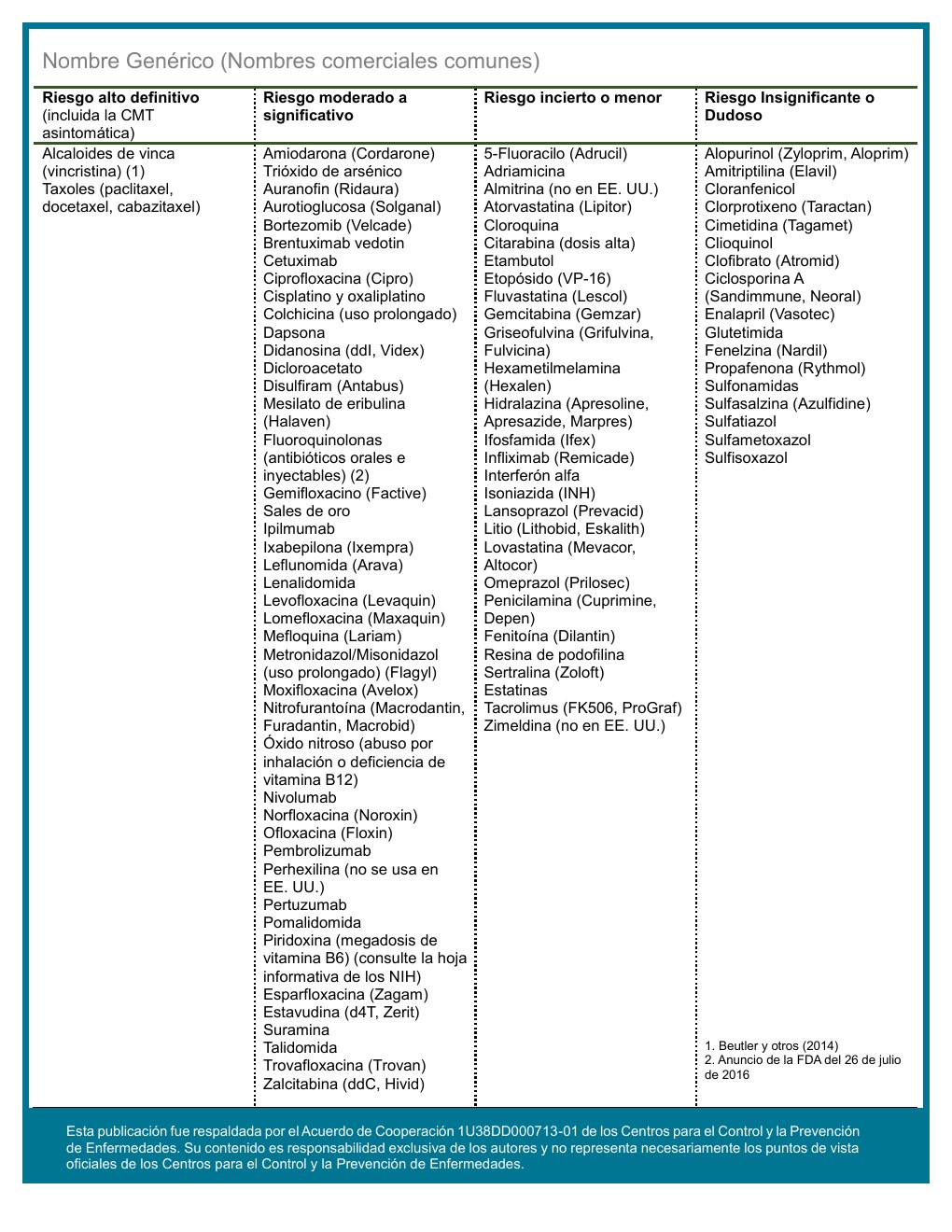
Definite high risk (including without symptoms)
Vinca alkaloids (Vincristine)
Taxols (paclitaxel, docetaxel, cabazitaxel)
Moderate to significant risk
- Amiodarone (Cordarone)
- Arsenic Trioxide
- Auranofin (Ridaura)
- Aurothioglucose (Solganal)
- Bortezomib (Velcade)
- Brentuximab Vedotin
- Cetuximab
- Ciprofloxacin (Cipro)
- Cisplatin and Oxaliplatin
- Colchicine (extended use)
- Dapsone
- Didanosine (ddI, Videx)
- Dichloroacetate
- Disulfiram (Antabuse)
- Eribulin Mesylate (Halaven)
- Fluoroquinolones (oral and injectable antibiotics)
- Gemifloxacin (Factive)
- Gold salts
- Ipilmumab
- Ixabepilone (Ixempra)
- Leflunomide (Arava)
- Lenolidomide
- Levofloxacin (Levaquin)
- Lomefloxacin (Maxaquin)
- Mefloquine (Lariam)
- Metronidazole/Misonidazole (extended use) (Flagyl)
- Moxifloxacin (Avelox)
- Nitrofurantoin (Macrodantin, Furadantin, Macrobid)
- Nitrous oxide (inhalation abuse or Vitamin B12 deficiency)
- Nivolumab
- Norfloxacin (Noroxin)
- Ofloxacin (Floxin)
- Pembrolizumab
- Perhexiline (not used in U.S.)
- Pertuzumab
- Pomalidomide
- Pyridoxine (mega dose of Vitamin B6)
- Sparfloxacin (Zagam)
- Stavudine (d4T, Zerit)
- Suramin
- Thalidomide
- Trovafloxacin (Trovan)
- Zalcitabine (ddC, Hivid)
Uncertain or minor risk
- 5-Fluoracil (Adrucil)
- Adriamycin
- Almitrine (not in U.S.)
- Atorvastatin (Lipitor)
- Chloroquine
- Cytarabine (high dose)
- Ethambutol
- Etoposide (VP-16)
- Fluvastatin (Lescol)
- Gemcitabine (Gemzar)
- Griseofulvin (Grifulvin, Fulvicin)
- Hexamethylmelamine (Hexalen)
- Hydralazine (Apresoline, Apresazide, Marpres)
- Ifosphamide (Ifex)
- Infliximab (Remicade)
- Interferon Alfa
- Isoniazid (INH)
- Lansoprazole (Prevacid)
- Lithium (Lithobid, Eskalith)
- Lovastatin (Mevacor, Altocor)
- Omeprazole (Prilosec)
- Penicillamine (Cuprimine, Depen)
- Phenytoin (Dilantin)
- Podophyllin resin
- Sertraline (Zoloft)
- Statins
- Tacrolimus (FK506, ProGraf)
- Zimeldine (not in U.S.)
Negligible or doubtful risk
- Allopurinol (Zyloprim, Aloprim)
- Amitriptyline (Elavil)
- Chloramphenicol
- Chlorprothixene (Taractan)
- Cimetidine (Tagamet)
- Clioquinil
- Clofibrate (Atromid)
- Cyclosporin A (Sandimmune, Neoral)
- Enalapril (Vasotec)
- Gluthethimide
- Phenelzine (Nardil)
- Propafenone (Rythmol)
- Sulfonamides
- Sulphasalzine (Azulfidine)
- Sulfathiazole
- Sulphamethoxazole
- Sulfisoxazole
Guides
Frequently asked questions
Are there medications people with CMT should avoid?
Only a small number of the thousands of medications in use are known to damage nerves, and most fall into two groups: chemotherapies and antibiotics, especially fluoroquinolones. For almost every drug, the risk has to be weighed against the benefit of the treatment. The one clear exception is the chemotherapy drug vincristine, which should be avoided in all circumstances if you have or might have CMT.
Why is vincristine so dangerous for people with CMT?
Vincristine can cause severe weakness and nerve injury after only one or two doses in people with minimal or even unknown CMT1A, the most common form. It carries an FDA black box warning against use in anyone who has CMT or who might have it, including relatives of people with CMT. Unlike other drugs on the list, it should be avoided in all circumstances.
What should I do if numbness or weakness starts after a new medication?
If new numbness, weakness, or pain begins soon after you start a medication, contact your doctor as soon as you can. Symptoms usually improve once the drug is stopped, but that improvement can be delayed by weeks or months, and some drugs like amiodarone take months to clear your system. Do not stop a medication on your own based on this page alone.
Is anesthesia or vaccination safe if I have CMT?
There is no proven link between worsening neuropathy and anesthesia or vaccinations, though some people report more symptoms afterward. In most cases the illness a vaccine prevents is far worse than the shot. Always tell your health care providers about any family history of CMT, especially your anesthesiologist.
Should I use this list to stop taking a drug?
No. This is safety information to discuss with your doctor, not medical advice, and no drug should be started or stopped based on this page alone. Bring the list to your appointment so you and your doctor can weigh the risks and benefits together before you begin something new.
Help us get this card into more hands
The Neurotoxic Drug Card is printed and mailed free to anyone who asks. Your gift covers the printing and the postage.

Start with your subtype
The most useful first step in living well with CMT is confirming your subtype. From there, the right care and research opportunities fall into place.