Mobility Aids and Assistive Devices
Canes, walkers, wheelchairs, and scooters are tools for doing more, not signs of giving up. That is worth saying plainly, because for most people the real barrier is not the device. It is the feeling that using one means losing ground. In practice the opposite is usually true. People who bring in the right support at the right time fall less, hurt less, and get to more places, because they are no longer spending all their energy just staying upright. A cane on the bad days, a rollator for the grocery store, a scooter for the airport: none of these is a permanent commitment, and using one sometimes does not mean using it always. Plenty of people with CMT use nothing at home and a rollator on a long day out, and that is a perfectly sensible way to live. The right support at the right time protects your energy, prevents falls, and keeps you independent. This page helps you think through the options, from the simplest walking stick through to powered chairs, and covers how to get a device that actually fits you and how to pay for it.
At a glance
- A mobility aid is a tool for independence. Using one earlier often means doing more, not less.
- The right device depends on your balance, strength, endurance, and where you use it.
- A physical or occupational therapist can match a device to your needs and teach you to use it safely.
- Bracing and mobility aids work together; see bracing and orthotics.
- Many devices are covered as durable medical equipment; see financial and insurance help.
- It is common to use different aids for different situations, and that is completely normal.
A tool, not a last resort
Many people with CMT wait longer than they need to before trying a mobility aid, because it can feel like a step backward. In practice it is usually the opposite. Conserving energy and avoiding falls lets you save your strength for the things you actually want to do, and it protects you from injuries that set you back much further.
The goal is to match the support to the moment. You might use nothing at home, a cane on uneven ground, and a scooter for a long day at an airport or a museum.
The range of options
Canes and walking poles add a point of contact and help with balance on uneven ground. A single cane suits mild balance needs; walking poles give you two points of support and a more upright posture.
Walkers and rollators give more stability, and a rollator adds wheels, a seat, and often a basket, so you can rest when you need to and carry things. Forearm crutches suit some people better than a cane when more support is needed on both sides.
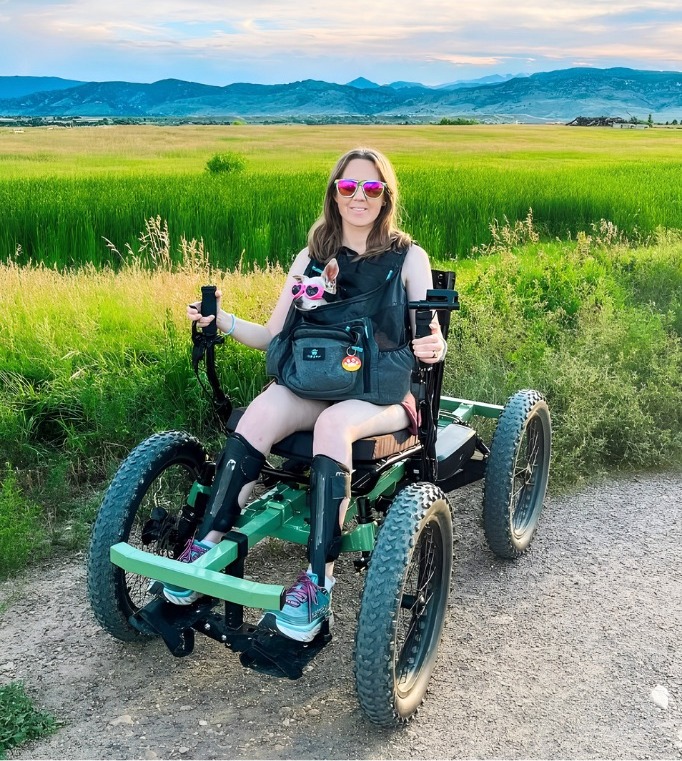
Manual and power wheelchairs and mobility scooters cover longer distances and preserve energy. Using one for distance does not mean you stop walking at home. Many people use a chair or scooter specifically so they can stay active longer.
How to choose
A physical or occupational therapist who knows CMT is the best guide. They will look at your balance, your strength, how far you can comfortably go, and where you spend your days, then recommend a device and, just as important, fit it to you and teach you to use it safely.
Bracing often comes first or alongside a mobility aid. A well-fitted AFO can improve your gait enough to change which device suits you, so it is worth sorting out bracing and mobility together.
Paying for a device
Many mobility aids qualify as durable medical equipment and may be covered by insurance with a prescription and a letter of medical necessity from your clinician. Coverage rules vary, and denials can often be appealed. Our page on financial and insurance help walks through the process, and an occupational therapist can help document why a device is medically necessary.
MDA Durable Medical Equipment Grant Program
The Muscular Dystrophy Association runs a grant program that helps cover durable medical equipment for people living with neuromuscular conditions, including CMT. Durable medical equipment is the long-lasting gear you use day to day: braces, walkers, wheelchairs, shower chairs, lifts, and similar items.
It is worth looking at when insurance denies a device, covers only part of the cost, or leaves you with a copay you cannot manage. Grants are limited and have their own eligibility rules and timelines, so check the current requirements before you count on one, and keep your clinician's letter of medical necessity handy since you will usually need it.
Full details and how to apply are on the MDA's equipment assistance page: mda.org equipment assistance.
Start with your subtype
The most useful first step in living well with CMT is confirming your subtype. From there, the right care and research opportunities fall into place.