Pain Management
Pain is one of the hardest parts of living with CMT, and it can come from many directions at once. You do not have to manage it alone, and the right plan can make a real difference.
Free HNF guide
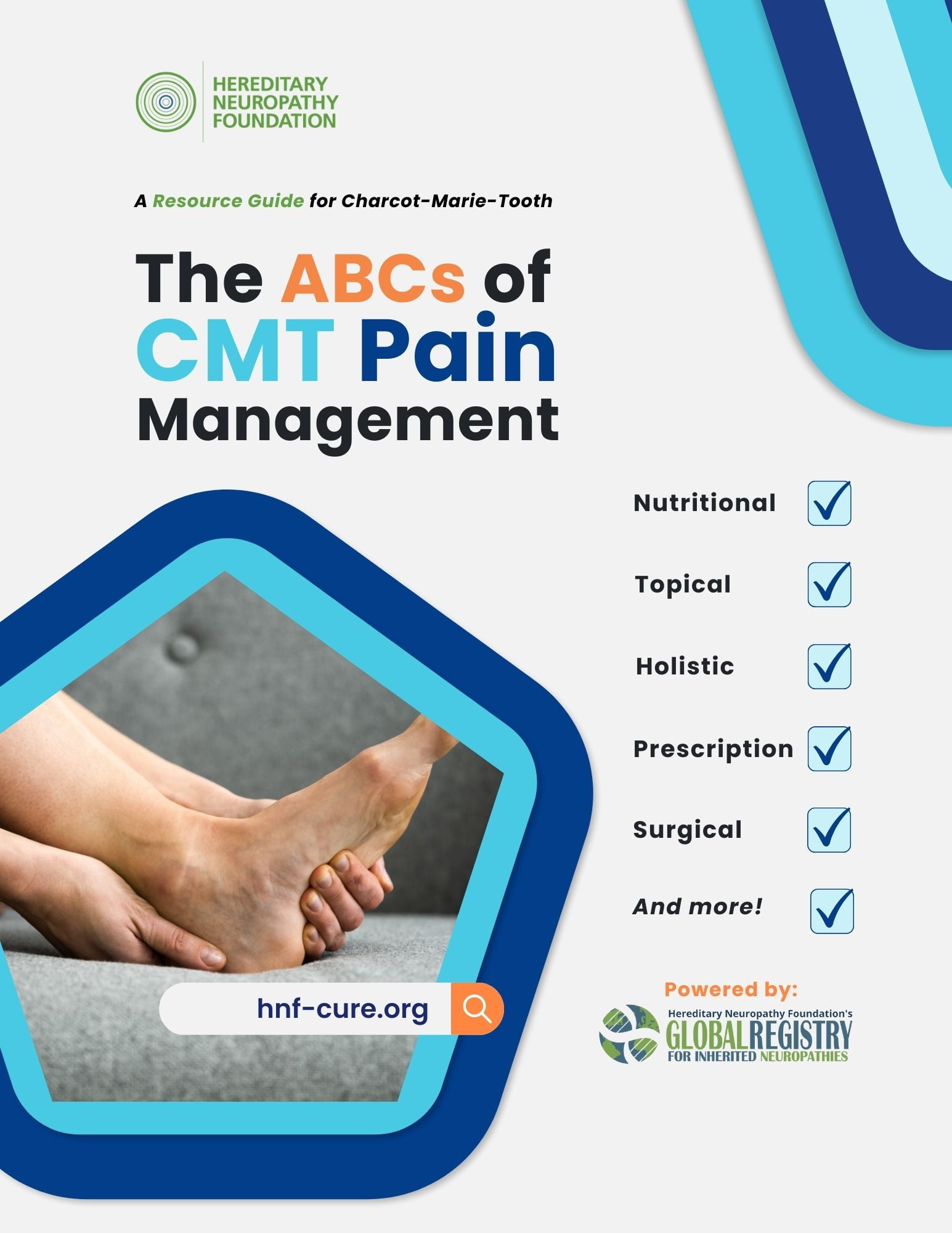
The ABCs of CMT Pain Management
HNF built this guide with a team of CMT specialists. Its 90 pages walk through nutritional, topical, holistic, prescription, and surgical ways to manage CMT pain, and it is free to read.
Read the guideAt a glance
- CMT pain can come from the condition itself, from treatments like ill-fitting braces or surgery, and from the emotional strain of chronic illness.
- Keep your provider updated on your symptoms and on whether your pain plan is actually working.
- The ABCs of CMT Pain Management guide covers over 80 pages of options across nutrition, exercise, topicals, supplements, prescriptions, holistic care, injections, and surgery.
- Adding your experience to the inherited neuropathies patient registry helps improve care for the whole community.
- Connecting with others living with CMT pain can ease isolation and surface practical ideas.
Pain can come from more than one source
Many people with CMT live with chronic pain. Some of it comes from the condition itself. Some of it comes from the limited treatments available, like surgery or braces and AFOs that do not fit or are not used correctly.
There is also the emotional weight of living with a chronic illness. That part is real too, and it can hit especially hard for children and young adults who are still learning how to live with their disease.
Work closely with your care team
Managing pain can be a challenge for you and for your healthcare provider. It often takes time and adjustments to find what works.
Keep your provider updated on your symptoms and on how well your pain management plan is actually working. That ongoing feedback is one of the most important things you can do to treat chronic pain successfully.
The ABCs of CMT Pain Management guide
We created a guide called the ABCs of CMT Pain Management to put real options in one place. It grew directly out of the Global Registry for Inherited Neuropathies, so it is built on the experiences that patients reported themselves.
The guide runs more than 80 pages and breaks pain management into clear categories, including nutrition, exercise, topicals, supplements, prescription medications, holistic approaches, injections, and surgery.
Think of it as a starting point for conversations with your provider, not a replacement for them. You can bring options from the guide to your appointments and talk through what might fit your situation.
Share your experience and help research
The more we understand about how pain shows up in CMT, the better care can become for everyone. Your story is part of that.
You can add your experience with pain and CMT to the Global Registry for Inherited Neuropathies, a patient registry that supports research for the CMT community. Sharing what you go through helps shape better answers over time.
Connect with others who understand
Living with pain can feel isolating, and it helps to talk with people who truly get it.
There is an online CMT community where patients share what they are experiencing with pain and learn from each other. Connecting with others facing the same challenges can ease the emotional side of chronic pain and give you practical ideas to consider.
A history of putting pain first
This work did not start yesterday. In 2017 we brought together patients, family members, caregivers, clinicians, researchers, funding agencies, payors, leading pain experts, and industry at a patient-centered pain summit focused on hereditary neuropathies. The goal was to truly understand chronic pain in the CMT and HNPP community and its impact on quality of life.
In 2020 our founder and CEO Allison Moore and her team led a chronic pain assessment to capture patient perspectives and keep pushing the community forward. We also advocated for national policy, including support for the Ensuring Patient Access and Effective Drug Enforcement Act, which passed both the House and Senate and was signed into law on April 19, 2016.
Frequently asked questions
What causes pain in CMT?
CMT pain can come from more than one source at once. Some of it comes from the condition itself, some from limited treatments like surgery or braces and AFOs that do not fit or are not used correctly, and some from the emotional weight of living with a chronic illness. That emotional part is real too, and it can hit especially hard for children and young adults still learning to live with their disease.
What is the ABCs of CMT Pain Management guide?
The ABCs of CMT Pain Management is a guide that puts real options in one place, and it grew directly out of the Global Registry for Inherited Neuropathies, so it is built on experiences patients reported themselves. It runs more than 80 pages and breaks pain management into clear categories, including nutrition, exercise, topicals, supplements, prescription medications, holistic approaches, injections, and surgery. Think of it as a starting point for conversations with your provider, not a replacement for them.
How should I work with my doctor on a pain plan?
Managing pain can be a challenge for both you and your provider, and it often takes time and adjustments to find what works. Keep your provider updated on your symptoms and on how well your pain management plan is actually working. That ongoing feedback is one of the most important things you can do to treat chronic pain successfully.
How can I help improve CMT pain research?
You can add your experience with pain and CMT to the Global Registry for Inherited Neuropathies, a patient registry that supports research for the CMT community. The more we understand about how pain shows up in CMT, the better care can become for everyone. Sharing what you go through helps shape better answers over time.
How can I cope with the emotional side of CMT pain?
Living with pain can feel isolating, and it helps to talk with people who truly get it. There is an online CMT community where patients share what they are experiencing with pain and learn from each other. Connecting with others facing the same challenges can ease the emotional side of chronic pain and give you practical ideas to consider.
Start with your subtype
The most useful first step in living well with CMT is confirming your subtype. From there, the right care and research opportunities fall into place.